Open the entrance without leaving it completely open
There are times when you want the main door open but would prefer a screened opening. A flyscreen can provide that separation while allowing air through the mesh. The benefit depends on the opening, mesh, weather and airflow through the rest of the home. It is not a promise of a particular indoor temperature or a quantified reduction in energy bills.
Plan the whole arrangement: where the main handle sits, which way the screen opens and whether the landing gives it enough room to swing. A practical fit matters more than a pattern chosen in isolation.
Give the entrance a deliberate finishing touch
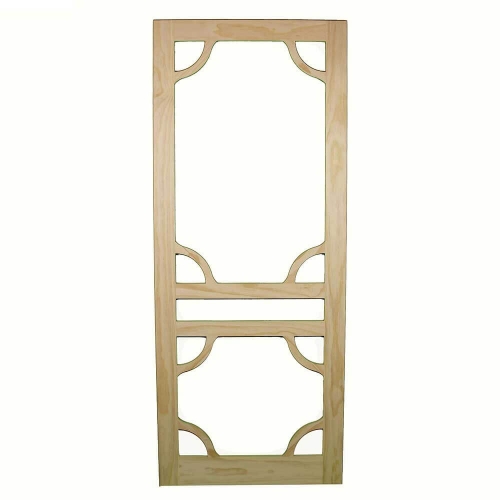
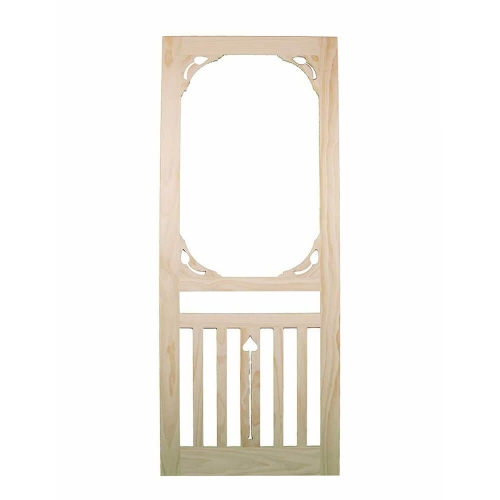
A timber frame can relate to the surrounding trim, the main door panels and other visible joinery. Curved details, spindles or simple rails create different effects. Look at the entrance from a distance as well as in close-up: a highly detailed screen may suit one doorway, while another looks better with a restrained layout.
Use a straight-on photograph when comparing the range. Notice how the screen rails will sit against glazing or panelling behind them. If a detail must be reproduced accurately, discuss custom work instead of treating a product photograph as a final drawing.
Choose what goes into the finished door
Buying the timber door separately gives you room to choose mesh, handles, hinges, a closer and the finish. That can be useful when you are coordinating hardware across a renovation or doing some of the work yourself. It also means those items belong in your budget. Our screen doors include retaining beading but do not include wire mesh.
If you prefer a single supplier to organise every stage, compare that complete service with the actual cost and time of arranging the components yourself. Neither buying route suits every household.
Keep future maintenance in mind
Removable retaining beads can make mesh access possible, but the ease of a future repair depends on how the door was finished and fixed. Label beads when removing them, preserve the timber edges and follow the original retaining method. Inspect the finish and hardware as part of normal upkeep rather than waiting for the door to rub or the coating to fail.
Understand what a decorative screen does not establish
A decorative timber screen is not presented here as a security-rated door, a child-safety barrier or a pet-containment system. If any of those functions are essential, identify the requirement before selecting the frame and mesh. Suitability must be assessed for the complete product and installation.
Start with the opening you have
The standard door is 820 mm wide, 2040 mm high and 25 mm thick. Custom dimensions are available through the calculator’s supported range, with final details confirmed by the workshop. Read the measurement guide, compare your favourite designs and ask about anything unusual before ordering.
Ready to choose your door?
Explore the full range, set your dimensions and send an enquiry to the workshop. Standard screen doors include beading; wire mesh is not included.
EXPLORE SCREEN DOORS ↗